Upper Body Hypertrophy Workout - 60min Advanced
This advanced upper body session maximizes hypertrophy by utilizing heavy barbell compounds followed by high-volume handle isolations. You will challenge your structural integrity with low-rep strength sets before transitioning into mechanical tension finishers. It is designed to create significant metabolic stress and muscle growth across all major upper body groups.
This is for advanced lifters or athletes looking to break through plateaus in muscle size and upper body strength. It requires familiarity with Tonal's bar and handle transitions and a high tolerance for volume.
Equipment
Workout Plan
Rest 90-120s between heavy barbell compound sets, 60s for standard handle movements, and 30-45s for high-rep finishers.
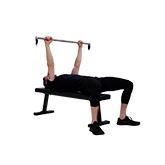
Barbell Bench Press
Chest, Triceps, Abs
Engage Spotter Mode and drive the bar up aggressively while keeping your feet planted.
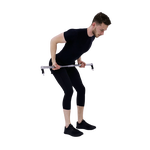
Barbell Bent Over Row
Back, Biceps, Abs
Maintain a flat back and pull the bar to your belly button, squeezing your shoulder blades.
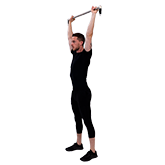
Standing Barbell Overhead Press
Shoulders, Triceps
Squeeze your glutes to stabilize your spine as you drive the bar toward the ceiling.
Barbell Straight Arm Pulldown
Back, Shoulders
Keep your arms locked and use Tonal's constant tension to feel the stretch in your lats.
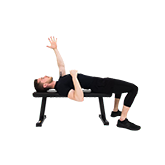
Alternating Bench Press
Chest, Triceps, Obliques
Control the eccentric phase on the descending arm while keeping the opposite handle locked in the top position.
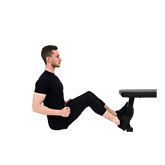
Seated Row
Back, Biceps, Abs
Pause at the peak of the contraction to maximize the mind-muscle connection with your mid-back.
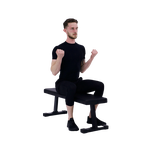
Seated Biceps Curl
Biceps, Forearms
Keep your elbows pinned to your sides and avoid using momentum; let the digital weight do the work.
Standing Chest Press
Chest, Triceps
Finish the workout with high-intensity reps, focusing on the pump in your chest and triceps.
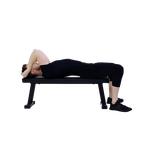
Skull Crusher
Triceps
Lower the handles toward your forehead slowly, utilizing Tonal's Eccentric mode for extra growth.
Why this order
The workout begins with heavy bilateral barbell movements to recruit the maximum amount of muscle fiber while you are fresh. We then transition to handles for unilateral and isolation work to address imbalances and maximize the pump. This sequence moves from high mechanical tension to high metabolic stress.
Want this personalized for you?
This is a template workout. Connect your Tonal and the AI coach adjusts weights to your strength scores, swaps exercises around injuries, and progresses you week over week.
Start Free with AI CoachFrequently Asked Questions
Why start with the barbell?
Starting with the bar allows you to move the most weight safely, prioritizing heavy mechanical tension when your central nervous system is most alert.
Can I use Chains or Eccentric mode?
Yes, adding Tonal's 'Chains' mode to the Barbell Bench Press or 'Eccentric' to the Biceps Curls will significantly enhance the hypertrophy stimulus of this workout.
How should I choose my starting weight?
Since this is an advanced workout, let Tonal’s initial suggestions guide you, but don't be afraid to manually increase the weight if you can complete all reps with perfect form.
Is it okay to swap the Seated Row for a Standing Row?
While the Seated Row provides more stability for heavier loads, a standing variation is acceptable if you prefer to engage more of your core during the pull.